How Casino Imagery Works in Youth Media
See how casino imagery in youth media sets a scene, signals mood, or works as a symbol, with clear prompts for discussing its role with young viewers.
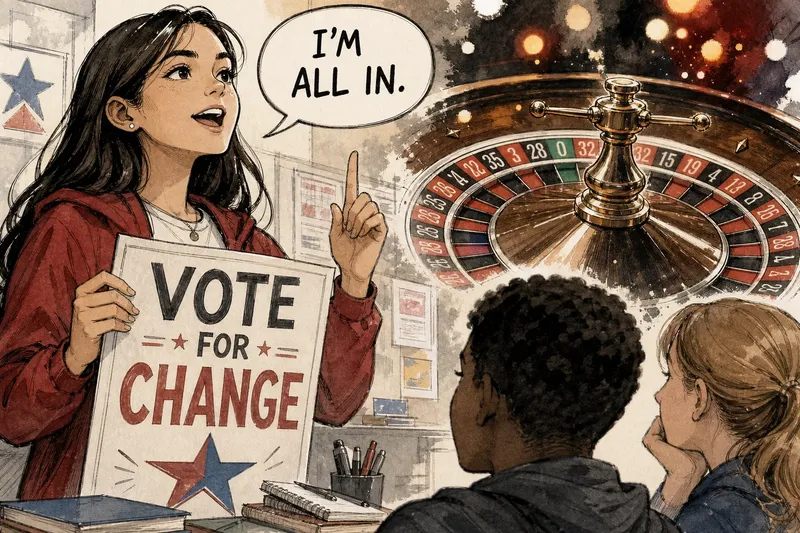
Casino imagery in youth media can turn a scene into a symbol, a mood, or a place before anyone explains it. A roulette wheel beside a school-election poster, for instance, may make the choice feel uncertain without moving the story into a casino.
Casino imagery roles
Start by asking what job the image does in the scene. A casino can be a setting that shapes where characters meet, a visual symbol that compresses an idea, or a style choice that gives a moment a particular feel.
Separate those roles before discussing whether the scene depicts gambling. A chip on a desk may be decoration; a room full of casino tables may establish a location; a wheel appearing during a risky decision may act as a symbol. The surrounding story helps distinguish them.
Symbols and story
Casino objects can carry associations such as chance, risk, glamour, or sudden change. Those associations are not fixed meanings. A character’s action, the dialogue, and the next story beat can support one reading while weakening another.
Imagine a fictional school-election scene: a candidate holds a poster, says, “I’m all in,” and a roulette wheel briefly appears. The candidate does not enter a casino or place a wager, and the scene returns to the poster. Read the wheel as a symbol of an uncertain contest; the tradeoff is that the image communicates quickly but may be unclear to viewers who do not connect roulette with chance.
Sound and atmosphere
Music and editing can make casino imagery feel celebratory, tense, comic, or strange. A bright chime may add a burst of excitement, while a pause before a wheel stops can stretch the suspense.
Ask what the sound is doing alongside the image. If the characters celebrate a win, the scene may frame the moment as a success; if another character looks uneasy, that reaction can complicate the flashy mood. A soundtrack shapes tone, but it does not by itself explain the plot.
Setting and design
Creators can borrow casino colors, lights, cards, or table layouts without placing characters in a gambling scene. Notice whether the design fills the whole setting or appears as a single visual accent.
That distinction helps keep discussion specific. A neon arch behind a character may create a showy atmosphere. A recognizable casino interior, paired with characters playing a game, does more to establish a location and activity.
What does the imagery mean?
Why does a cartoon show a roulette wheel?
The wheel may stand for chance, suspense, or an uncertain result. Check what decision or event appears beside it before assigning a meaning.
Does casino-style design make a scene a casino scene?
Not by itself. Look for the location, the characters’ actions, and whether the plot connects the design to a wager or gambling activity.
How can I discuss the image with a young viewer?
Ask what detail caught their attention and what feeling it gave the scene. Then compare their reading with another visible or audible clue, without insisting on a single interpretation.
Scene-reading checks
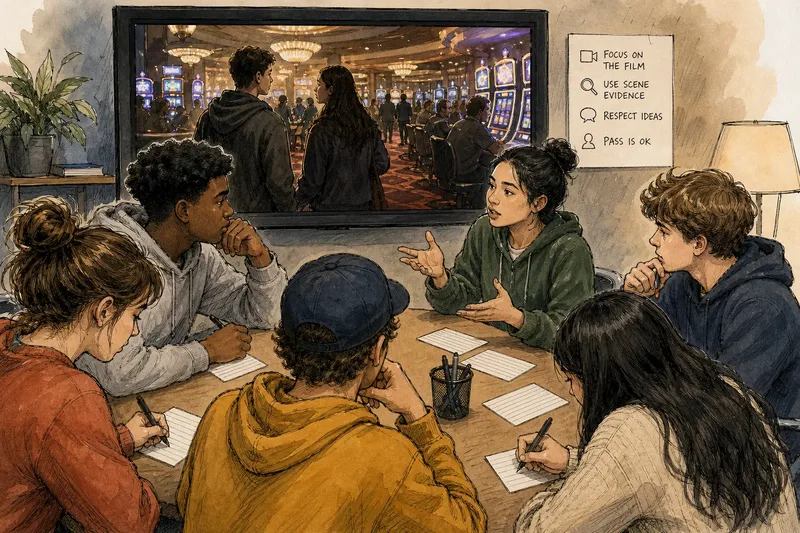
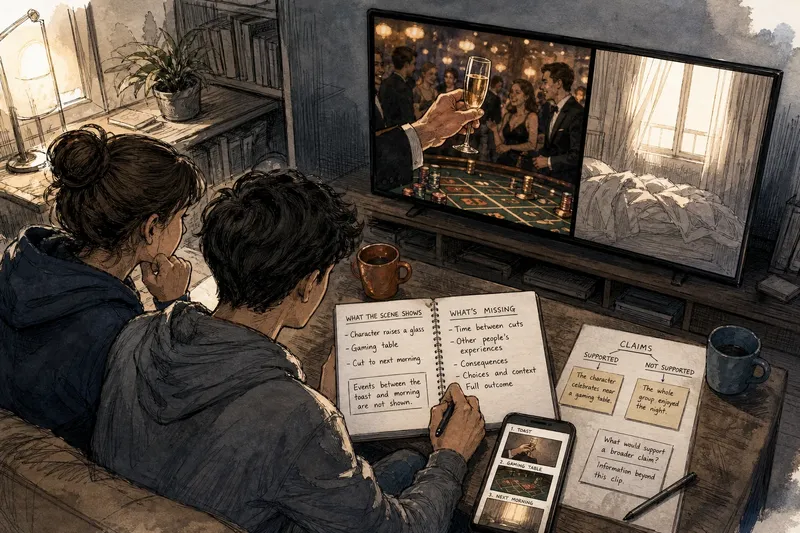
Use a clip, still image, or game scene. For each observation, choose the follow-up that fits what is actually present.
- Check whether the image shows a full venue or one casino object. If it shows a venue, discuss how the location shapes the characters’ options; if it shows one object, ask what idea it may symbolize.
- Check whether a character places a wager. If someone does, discuss how that action affects the plot; if no wager appears, consider whether the image works as atmosphere or metaphor.
- Check the dialogue for words about chance, risk, or fortune. If those words match the image, connect them to the scene’s decision; if they do not, look for a visual or comic purpose.
- Check the music and sound effects. If they make the moment feel triumphant, compare that mood with the characters’ reactions; if they create tension, identify the edit or event that builds it.
- Check what follows the image. If the next story beat shows a consequence, discuss how it changes the image’s meaning; if the scene cuts away, note what viewers are left to infer.
- Check whether the scene makes sense without the casino reference. If it does, ask what extra mood or symbol the image adds; if it does not, identify which missing story detail would clarify the moment.
Reading one scene
Imagine a fictional animated clip with three inputs: a school-election poster, the line “I’m all in,” and a roulette wheel that appears for one cut before the poster returns. First, note that the setting stays at school and that no character enters a casino. Next, check the action: nobody places a wager, so the wheel does not establish gambling activity. Then compare the line and image with the election plot; both point toward an uncertain outcome. The reading is that the wheel acts as a symbol, while the tradeoff is that a viewer unfamiliar with the association may need the surrounding dialogue to make sense of it.
Compare interpretations
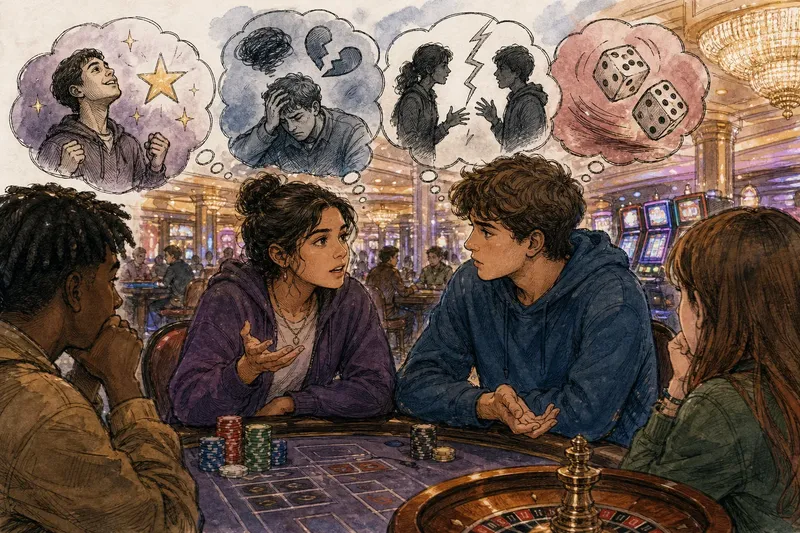
Two viewers may notice different clues: one hears the sound effect, while another focuses on a character’s expression. Ask each person to name the detail behind their reading, then compare how those details fit the setting and plot.
For a useful discussion of casino imagery in youth media, keep the question narrow: does this image establish a place, create a mood, or stand for an idea? Naming its role first makes room for more than one interpretation while keeping the conversation grounded in the scene.