Group Discussion or Solo Reflection for a Casino Scene?
Choose group discussion or solo reflection for a casino scene with prompts that clarify media choices, protect privacy, and help young viewers compare readings.
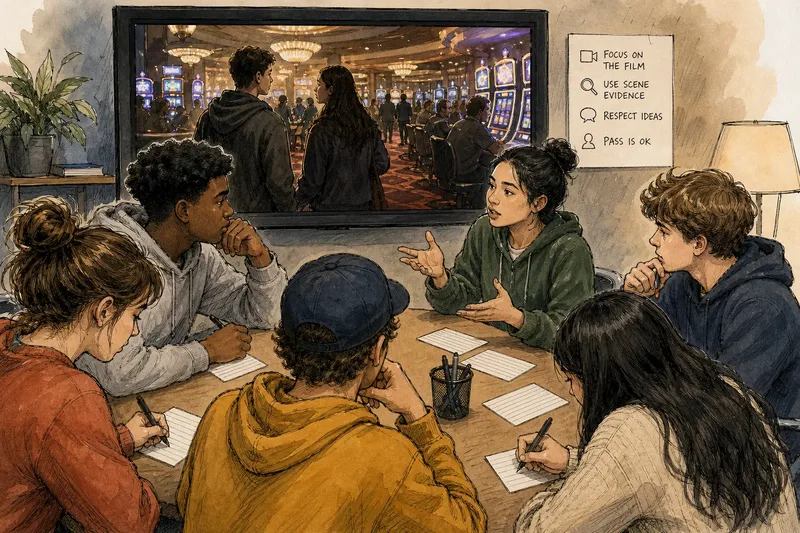
Choose group discussion or solo reflection for a casino scene based on whether the goal is to form an individual reading or compare how the scene works. A private note can help a young viewer identify what the film suggests; discussion can test that reading against other interpretations without turning the subject into a personal disclosure.
Decide what to examine
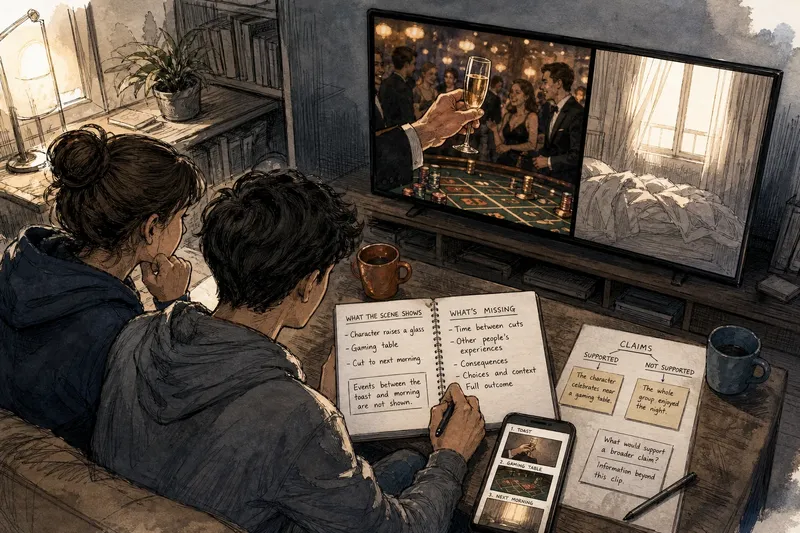
Start with the media question, not the activity. “What did the character decide?” invites a different kind of response than “How does the editing make the casino seem exciting?” The first may touch on values and boundaries; the second directs attention to craft choices that viewers can point to together.
Use solo reflection when people need time to notice details, sort out an uncertain reaction, or decide what they are willing to share. Use discussion when the aim is to compare interpretations of visible elements such as dialogue, lighting, sound, camera position, or the order of shots.
Keep the focus on what the scene presents. Young people can analyze how a casino is framed without being asked about gambling in their own lives or their families. If someone volunteers a personal concern, acknowledge it without inviting the group to question them, and follow relevant youth-program safeguarding procedures.
Choose a working format
- Observation: If participants can identify a concrete detail, such as a close-up or a line of dialogue, then invite them to explain its effect; if the scene is unclear, replay or describe the moment before asking for interpretation.
- Thinking time: If several viewers need time to form a response, then start with a private note; if they are already ready to compare readings, move to a facilitated discussion.
- Privacy: If a prompt might invite personal disclosure, then reword it to ask about the character or filmmaking; if it still feels personal, offer a private response or let participants pass.
- Group readiness: If participants can listen without demanding agreement, then compare interpretations; if the talk turns into teasing or pressure, pause and return to scene details or written reflection.
- Purpose: If the goal is to hear each viewer’s first impression, then collect individual notes; if the goal is to examine how meaning changes across viewers, invite voluntary responses to a shared prompt.
- Access: If writing is a barrier for someone, then offer a spoken response to the facilitator, drawing, or quiet thought time; if none of those works for them, allow them to observe without producing an answer.
Compare the formats?
What does solo reflection reveal?
A private response can capture an initial impression before the group’s strongest voices shape the conversation. Use an index card, notebook, or private document, and let the viewer choose whether to share any part of it.
What does group discussion add?
Discussion lets viewers compare evidence and notice different readings of the same scene. Ask them to point to a specific filmmaking choice rather than defend a personal position.
Can both formats fit one session?
Yes. Begin with private notes, invite voluntary discussion, then offer another private prompt about what detail now seems most significant. This shows whether the conversation added a perspective without requiring anyone to announce a change of mind.
How should disagreement be handled?
Ask each speaker to name the scene detail behind their interpretation, then make room for more than one reading. If the exchange shifts toward judging a classmate, stop that line of talk and redirect attention to the film.
Work through a scene
Say a youth media club plans to discuss an invented film scene in which a teenager enters a casino with an older cousin, notices bright lights and a confident crowd, then leaves after a tense exchange. The facilitator has six participants, one scene to review, six index cards, and a shared prompt: “Which detail most shapes your reading of the character’s choice?” These are invented planning details, not findings from a real session.
- The facilitator states that the aim is to analyze the scene, not anyone’s gambling experience. Participants may write, speak, observe, or pass.
- Each participant gets one card and writes one scene detail. The observable output is up to six individual notes; the facilitator can see which details viewers noticed without asking them to disclose private experiences.
- The facilitator invites volunteers to read a detail and explain its effect. If a viewer points to bright lighting as an invitation, the group can consider that reading; if another points to the tense exchange, the facilitator can ask how it changes the mood.
- The facilitator records two contrasting interpretations on the board and asks what evidence supports each. If both connect to visible details, the group keeps both readings; if a claim has no scene evidence, the facilitator asks what moment might support it or sets it aside.
- Participants use a second card to note one question they still have, or leave it blank. The resulting cards show whether viewers want more discussion of a filmmaking choice; the facilitator can use those questions to plan a later media-focused session.
The tradeoff is clear: the cards preserve individual reactions, while the conversation helps participants compare them. The facilitator does not treat a quiet participant’s silence as agreement, and no one has to explain why they chose not to speak.
Keep the discussion focused
Set expectations before viewing. Ask participants to discuss what the scene shows, avoid guessing about classmates’ lives, and respond to ideas rather than people. Make passing a normal option; do not follow it with “Why not?” or ask another participant to answer on someone’s behalf.
Use prompts that call for observation and reasoning:
- Which sound or image first draws your attention?
- What does the camera show, and what does it leave outside the frame?
- How does the cousin’s dialogue affect your reading of the teenager’s choice?
- What might another viewer infer from the same detail?
If the discussion turns into a debate about whether casino gambling is harmless or harmful, return to the scene: “Which part of the film led you there?” That keeps the conversation grounded in media interpretation and avoids asking young people to speak for a group or disclose personal history.
Choose a closing response
Close in the format that fits the session’s purpose. For a discussion focused on comparing readings, ask participants to name a film detail that another person helped them notice. For a session centered on individual interpretation, offer a private note or quiet reflection instead.
For the invented club, the facilitator can sort the cards into scene details, questions, and blank responses. If the notes point to different parts of the scene, a later session can examine how editing and sound guide attention; if the cards raise questions that cannot be answered from the film, the facilitator can distinguish those unknowns from what the scene actually shows. Group discussion or solo reflection for a casino scene works best when the format follows that purpose, rather than making public participation the measure of engagement.