Planning a Casino-Themed Film Night Without Making Play the Activity
Plan a casino-themed film night around one suitable scene, clear boundaries, and creative activities so young people can examine film craft without gambling.
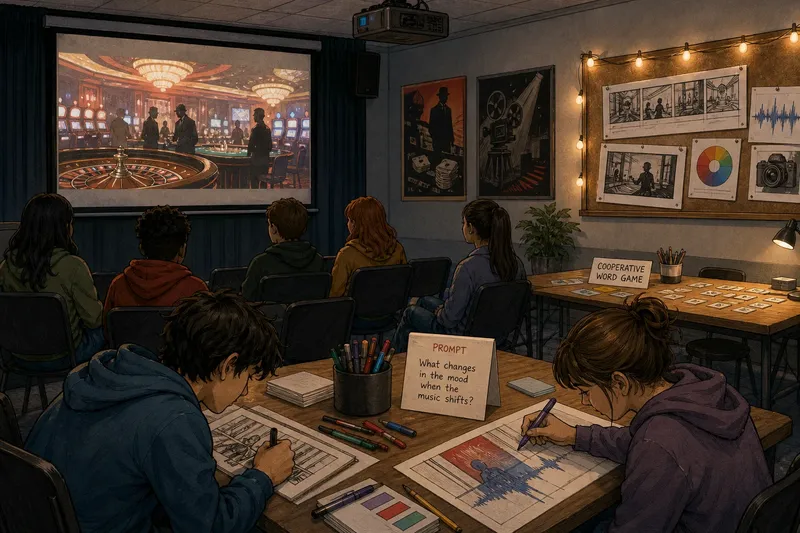
A casino-themed film night needs a clear plan for the room, materials, and viewing choices—not casino props or games. Keep the focus on how a scene is made, and make each activity easy to join without speaking.
Plan the room
Choose a quiet viewing area with chairs facing the screen, plus a separate table for drawing or writing. Set out paper, index cards, markers, and pencils. Keep chips, play money, betting slips, odds boards, and chance-based prizes out of the space.
Preview the exact scene. Check its rating, language, themes, and content notices, then share the title and relevant details with participants and caregivers before the event. If the material seems unsuitable, select another scene.
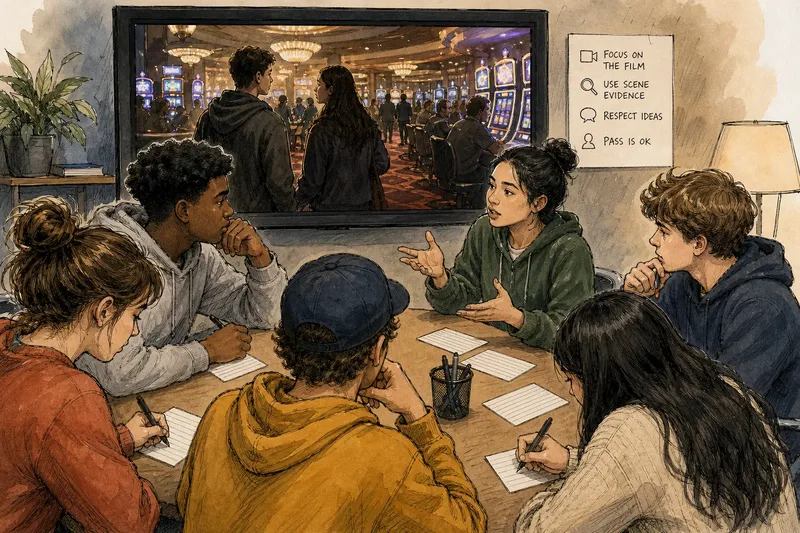
Check that captions work and that everyone can see and hear the screen. If the room layout makes discussion difficult, prioritize clear sightlines and offer written responses rather than rearranging the event around a loud group conversation.
Prepare film activities
Build the event around one craft question, such as how music changes a scene’s mood or how editing directs attention. Prepare a short creative task that uses ordinary supplies and does not imitate wagering.
- Check whether the scene has a clear camera, sound, or editing detail; if it does, write a prompt about that detail, but if it does not, choose a scene with a more visible craft choice.
- Check whether the content notices and rating suit the group; if they do, include them in the invitation, but if they do not, select different material and update the invitation.
- Check whether the screen is visible from every viewing seat; if it is, keep the arrangement, but if it is not, move chairs or use a different room.
- Check whether captions are available and readable; if they are, turn them on when useful, but if they are not, choose a scene whose dialogue and action remain clear without them.
- Check whether the art table has paper, pencils, and markers; if it does, offer a drawing or shot-revision task, but if it does not, prepare a spoken observation or a shared document instead.
- Check whether any supplies resemble casino play, including chips, play money, or betting slips; if they do, remove them and replace them with neutral art materials, but if they do not, leave the prepared supplies in place.
- Check whether a non-screen activity is ready; if it is, tell participants where it will happen, but if it is not, set up a cooperative drawing or word game before the group arrives.
Say you are planning a fictional after-school event for a group that likes drawing. Your starting materials are one scene with a noticeable music change, a screen, paper, markers, and a quiet side table. You preview the scene and decide it suits the group, then write the prompt, “What changes in the mood when the music shifts?” You place paper and markers at the side table, check that the screen is visible from the chairs, and put a cooperative word game on a separate table. The expected result is a room with a viewing option, a creative response option, and a non-screen option; if the scene turns out to be unsuitable during the preview, the decision is to replace it before sending the invitation.
Offer activity choices
Set out a few ways to respond, but do not ask anyone to explain a choice. A participant can annotate a scene, redraw a shot, rewrite a line, make a poster about color and sound, join the cooperative game, or simply watch.
Make each option usable without a public presentation. For example, put a prompt card beside the paper so someone can draw quietly, or leave a shared document open for written observations. Keep the alternative activity in the same room or an easy-to-find nearby space.
Run the screening
- Welcome participants and explain that the event looks at filmmaking rather than gambling.
- Name the available options, show where each activity takes place, and explain that anyone may pass without giving a reason.
- Introduce the scene question and play the selected scene.
- Leave a quiet pause, then make the drawing, annotation, revision, and alternative activity available.
- Close with an optional observation or written response; do not require a personal story or presentation.
Keep conversation on film choices: the soundtrack, camera angle, editing, or a character’s portrayal. Avoid presenting gambling as a dependable way to make money or as a shortcut to excitement. Keep any unrelated card or board game free of wagering.
Questions about the event?
Does everyone need to watch the same film?
No. A selected scene can give viewers a shared reference without requiring a full movie. Make the separate activity available to anyone who prefers not to watch.
What supplies should I set out?
Use paper, index cards, pencils, and markers for annotation, drawing, or poster work. Leave out materials that imitate betting, including chips, play money, and betting slips.
What if the room is too noisy?
Use written prompts and quiet creative tasks instead of relying on group discussion. If the screen or audio is hard to follow, move to a quieter room or choose a different scene.
Can I include casino decorations?
Skip decorations that resemble gambling equipment or wagering. Film posters, colored paper, and neutral decorations can establish the theme while keeping the activity centered on media craft.
Keep the boundary clear
In the invitation, call the event a film-craft activity and name the selected scene, content information, and available alternatives. At the event, keep the supplies and prompts consistent with that description.
A well-planned casino-themed film night gives young people concrete ways to notice framing, sound, and editing without turning gambling into a game. Before guests arrive, check the scene, room, supplies, captions, and alternative activity; those decisions make the event easier to run and easier to understand.